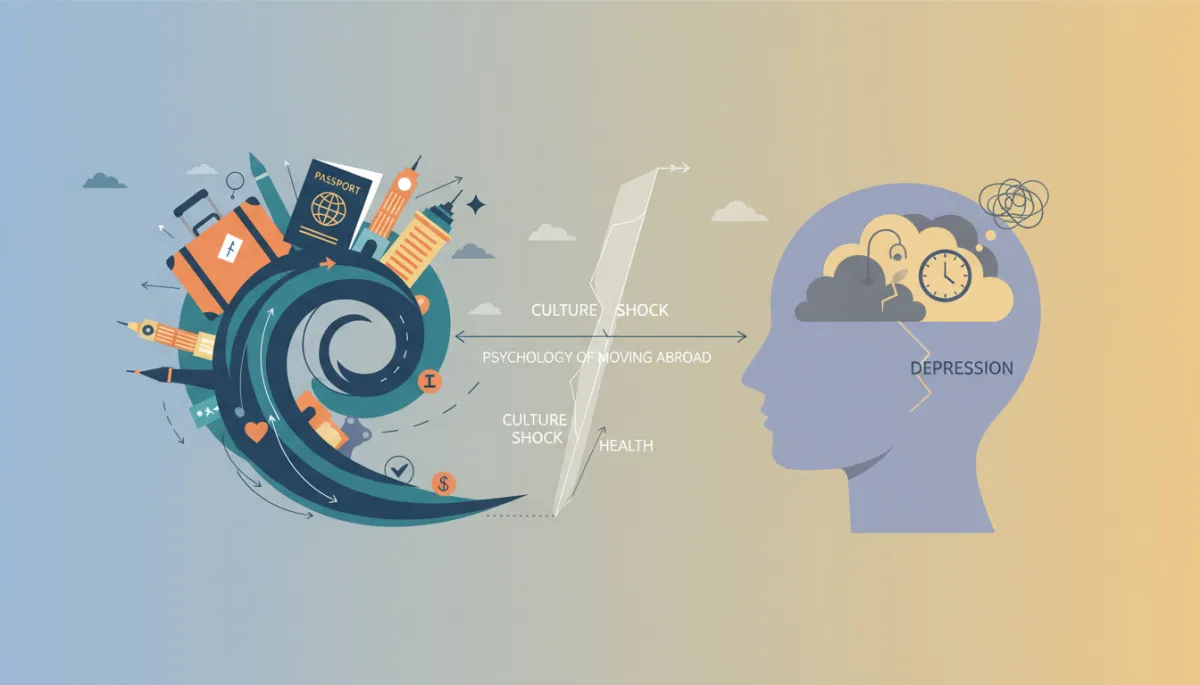
Culture Shock vs Depression: Expat Mental Health
Mental Health, Moving Abroad, Expat Life, Culture Shock
Culture Shock vs. Depression: Is It the Move or My Mental Health?
Uprooting your life and moving abroad can be exciting, brave, and life-changing. It can also feel unexpectedly heavy. Many expats find themselves wondering: Am I just going through culture shock, or is this something deeper like depression? Understanding the psychology of moving abroad can help you answer that question with more clarity and compassion for yourself.
The Emotional Whirlwind of Moving Abroad
Moving abroad is often sold as an adventure: new food, new friends, new opportunities. That story is partly true, but it is never the whole story. Beneath the Instagram moments, there is a complex emotional process unfolding. The psychology of moving abroad tells us that relocation is one of life’s biggest stressors, comparable to changing careers, ending a relationship, or losing an important support network.
When you become an expat, you are not just changing your address. You are changing your language environment, your social roles, your daily routines, and often your sense of identity. That much change in a short time can overwhelm even the most resilient person. Feeling off-balance is not a sign of weakness; it is a natural response to a massive life transition.
Gentle Reminder: You can be grateful for the chance to live abroad and still struggle emotionally. Both can be true at the same time.
What Exactly Is Culture Shock?
Culture shock is the emotional and psychological reaction you have when you are immersed in a culture that feels unfamiliar. It is not just about language or food; it is about all the invisible rules you suddenly do not know, how people queue, how they show respect, what counts as polite, how friendships form, even how loudly people speak on public transport.
Most people experience culture shock in stages:
Honeymoon phase: Everything feels exciting, charming, and new. You might feel energized and curious, soaking up every difference with enthusiasm.
Frustration phase: The differences that once felt cute now feel exhausting. Everyday tasks take more effort. You might feel irritated, lonely, or easily overwhelmed.
Adjustment phase: You start to understand the rhythms of your new home. You build routines, decode social cues, and feel more competent navigating daily life.
Adaptation phase: You feel more at home. You may even develop a “third culture” identity, blending your original culture with your new one.
Not everyone moves through these stages in a straight line. You can slide back and forth, especially if you face new stressors like visa issues, job changes, or relationship problems. Still, culture shock is generally temporary and closely tied to adaptation to your environment.
How Culture Shock Feels in Everyday Life
Culture shock often shows up in subtle, practical ways. You might find yourself:
Feeling drained after simple tasks like grocery shopping or taking public transport because everything requires more attention and effort.
Getting frustrated by things that “don’t make sense” to you, opening hours, bureaucracy, or how people handle time and punctuality.
Feeling like an outsider in conversations because you do not share local references, humor, or childhood experiences.
Missing small comforts from home, your favorite snacks, your language on street signs, or familiar social rituals like how people greet each other.
These reactions are normal for expats. They reflect your brain working overtime to decode a new environment. The psychology of moving abroad suggests that your mind is constantly comparing “how things are done here” with “how things were done back home,” and that mental comparison can be exhausting.

Moments of isolation in public spaces are a common part of culture shock.
What Is Depression, and How Is It Different?
Depression is more than “feeling sad” about your move. It is a mental health condition that affects your mood, thoughts, body, and behavior. While only a professional can diagnose depression, there are common signs to watch for, especially if you are living abroad and trying to understand what you are going through.
Persistent sadness, emptiness, or hopelessness most days, for at least two weeks or longer.
Losing interest in activities you used to enjoy, even when they are familiar or accessible online, like hobbies from home.
Changes in sleep (sleeping much more or much less) and appetite (eating far more or far less than usual).
Difficulty concentrating, making decisions, or remembering things, even when tasks are simple or familiar.
Intense self-criticism, guilt, or thoughts like “I am a failure for not coping better with this move.”
In severe cases, thoughts of self-harm or not wanting to be alive.
Important: If you are having thoughts of harming yourself or ending your life, seek immediate support from local emergency services, a crisis line, or a trusted person nearby. You do not have to face this alone.
Culture Shock vs. Depression: Key Differences to Notice
Because moving abroad is so disruptive, culture shock and depression can overlap. You might feel tired, lonely, or tearful in both situations. The difference lies in the pattern, intensity, and duration of your symptoms, and whether they are mainly about the new culture or about you as a person.
Culture Shock Depression Triggered mainly by differences in your new environment. May be triggered by the move, but affects your whole sense of self. Emotions fluctuate, some good days, some bad days. Mood is low most of the time, with little relief. You may still feel joy when connecting with familiar people or activities. Even enjoyable things feel flat or meaningless. Tends to ease as you adjust and build routines. Persists over weeks or months, with or without culture stress.
If your emotional pain is constant, overwhelming, or clearly interfering with your ability to function, it is wise to treat it as a mental health concern rather than “just” culture shock, even if the move abroad played a role in triggering it.
Why Moving Abroad Can Stir Up Old Wounds
The psychology of moving abroad shows that relocation does not happen in a vacuum. When you become an expat, you bring your history, coping patterns, and unresolved experiences with you. Being far from your familiar support network can make old wounds feel sharper. For example:
If you have struggled with anxiety or depression before, the stress of adapting to a new culture can intensify those patterns.
If you grew up feeling like an outsider, culture shock might echo those early experiences and make you feel “not good enough” all over again.
If you used busyness or social life to distract from painful feelings, the quieter moments abroad can bring those feelings to the surface.
None of this means you made a mistake by moving. It means the move is shining a light on parts of your emotional life that need care. In that sense, moving abroad can be both destabilizing and an opportunity for deep personal growth, if you have the right support.
Questions to Ask Yourself When You Feel Low Abroad
When you are in the middle of it, it can be hard to tell whether you are dealing with culture shock, depression, or both. These reflective questions can help you get clearer:
Do my emotions change depending on the day or situation? If some days feel lighter, especially after a good conversation, a familiar meal, or a successful interaction in the new culture, you may be experiencing culture shock more than clinical depression.
Do I still feel joy or interest in anything? If absolutely nothing feels meaningful or enjoyable, even things unrelated to your move, depression may be playing a role.
How long have I felt this way? Intense reactions in the first weeks or months of moving abroad are common. If your mood has been consistently low for months without improvement, consider reaching out for professional help.
What story am I telling myself? Culture shock often sounds like “This place is strange” or “I don’t understand how things work here.” Depression often sounds like “I am the problem,” “I am failing,” or “Nothing will ever get better.”
Key Takeaway: You do not need to perfectly label your experience before asking for support. If you are suffering, that alone is a valid reason to reach out.
Practical Ways to Ease Culture Shock as an Expat
While you cannot skip the adjustment process, you can soften it. These strategies support your mental health while you navigate culture shock and the broader psychology of moving abroad:
Create small anchors of familiarity. Cook a dish from home, listen to music in your language, or keep a small object that reminds you of your previous life. These anchors can calm your nervous system when everything else feels unfamiliar.
Build gentle routines. Even simple rituals, morning walks, a weekly café, regular call times with loved ones, give structure and predictability, which are soothing when your environment is new.
Connect with other expats and locals. Other expats understand the emotional rollercoaster of moving abroad, while local friends help you feel included in your new culture. You do not have to choose one or the other; both are valuable.
Give yourself permission to rest. Your brain is processing a huge amount of new information. Rest is not laziness; it is part of adaptation. Protect your sleep, and allow downtime without guilt.
When to Consider Professional Mental Health Support
Many people hope that time alone will fix their emotional struggles after moving abroad. Sometimes it does, but sometimes it does not, especially when depression is involved. Reaching out for support is not an admission that you “failed” at being an expat. It is a sign that you are taking your well-being seriously in a challenging season of life.
Your low mood or anxiety has lasted longer than a month without easing.
You struggle to get through the day, work, study, or basic self-care feel overwhelming most of the time.
You feel stuck in self-criticism, shame, or hopelessness about your decision to move abroad or about yourself in general.
You notice thoughts of self-harm, or you feel that life is not worth living.
Working with a therapist who understands the psychology of moving abroad and expat life can help you untangle what is “just” culture shock from what might be depression or another mental health condition. Together, you can explore your story, your coping strategies, and your hopes for this chapter of your life, whether you stay abroad or eventually choose to return home.
Making Space for Both: It Can Be the Move and Your Mental Health
One of the kindest things you can do for yourself as an expat is to drop the idea that it has to be either culture shock or depression. For many people, it is a mix of both. The move abroad acts as a powerful catalyst, stirring up old patterns and creating new stress. Your mental health, in turn, shapes how you interpret and respond to those experiences.
Instead of asking, “Is it the move or my mental health?” you might experiment with a more compassionate question: “What kind of support do I need right now, given everything I am going through?” That support might include practical help adjusting to the culture, emotional validation from other expats, and professional care for depression or anxiety if they are part of your picture.
Moving Abroad and Your Next Chapter
Moving abroad is not just a change in scenery; it is a profound psychological journey. Culture shock tests your flexibility and curiosity. Depression, if it shows up, tests your self-compassion and willingness to seek help. Neither experience defines your worth, and neither means you “chose wrong” by becoming an expat.
Over time, many people find that their move abroad becomes a turning point—not because it was easy, but because it invited them to know themselves more deeply. As you navigate this chapter, remember: it is okay to ask big questions, to feel conflicting emotions, and to reach for support. You are not the only one wondering whether it is the move or your mental health. You are simply human, doing your best in a new world.
Read more here on: Culture Shock - Moving to Australia from UK.
Book a free discovery call here.