
The Quiet Roommate: Loneliness Abroad
Expat Life, ExpatLoneliness, Living Abroad
The Quiet Roommate: A Story About Loneliness When You Move Abroad
Loneliness is the quiet roommate no one tells you about when you pack your bags for a new life abroad. It slips into your suitcase between the excitement and the visa documents, and it waits, patiently, for the noise of arrival to fade. This is a story about that silence, and what happens when you finally decide not to face it alone.
The First Night: When Expat Loneliness Arrives
On the first evening in her new flat, Emma balanced a takeaway carton on her knees and watched the city blink outside her seventeenth-floor window. She had done everything right, at least according to the glossy version of "Expat Life" she had seen on social media. New promotion. International posting. A skyline that looked like the future. Her friends back home had flooded her phone with messages: You’re so brave. I’m jealous. Send pictures.
But as the light drained from the sky and the city settled into its own rhythm, a different feeling crept in. The flat was too quiet. The plastic fork scraped too loudly against the carton. When she opened her mouth to speak, out of habit, there was no one there to answer. That was the first moment she recognised it: the heavy, echoing Loneliness that can come with Living Abroad.
The Hidden Side of Expat Life
By day, Emma’s life looked like a success story. She navigated the glass lifts and open-plan office of her new company with professional ease. She learned how to order coffee in the local language and laughed at the right moments in meetings. Colleagues praised her for how “quickly she was adapting”. On paper, this was Cultural Adaptation at its smoothest.
But the story looked different when the workday ended. The office lights dimmed, and her colleagues scattered into pre-existing circles - family dinners, childhood friendships, university networks she didn’t share. The city that had seemed full of possibility suddenly felt like an enormous room where everyone else already knew each other. This was Expat Loneliness in its purest form: not just being alone, but feeling outside of everything, all at once.
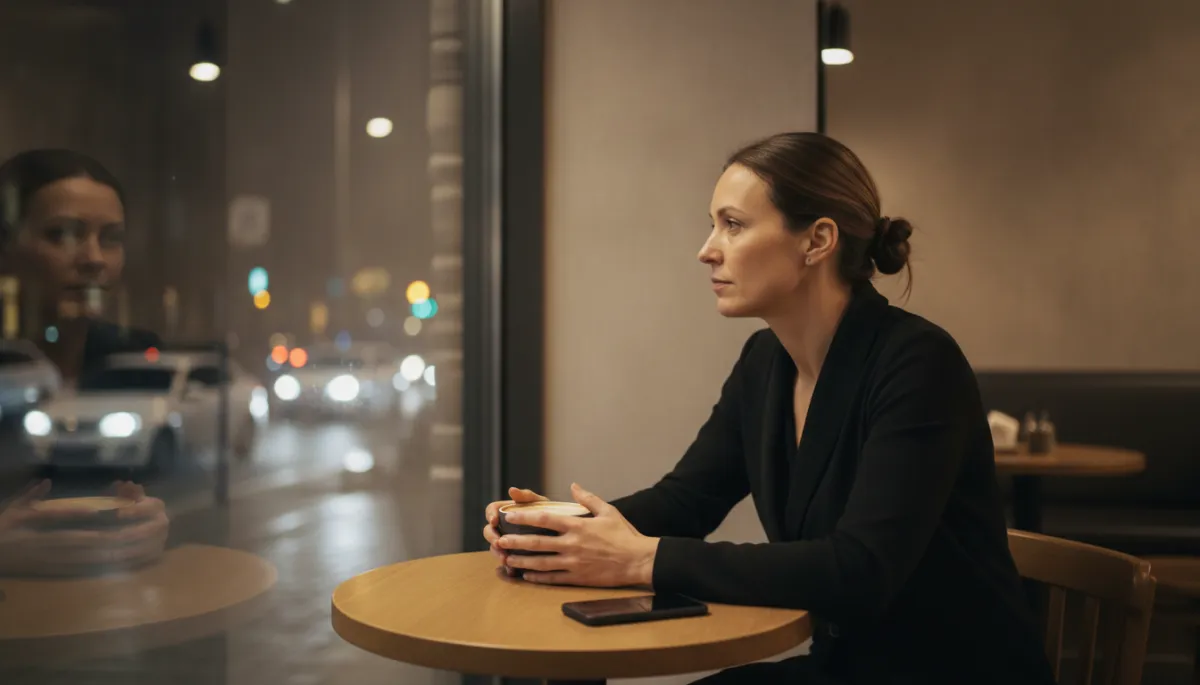
Many expats describe evenings in cafés as both comforting and painfully isolating.
Immigrant Challenges You Don’t See on Instagram
No one had warned Emma that Immigrant Challenges are rarely dramatic. They’re not always about visas, paperwork, or obvious discrimination. Often, they’re about the small, daily frictions that slowly wear at your sense of self. The way shop assistants switch to English with a tight smile the moment they hear your accent. The jokes you don’t quite catch at work. The way your body tenses before you speak, wondering if you’ll use the wrong word again and feel the familiar flush of embarrassment rise in your cheeks.
In her home country, Emma had been quick, witty, and articulate. Abroad, she often felt clumsy, reduced to the basics of who she was. Her usual confidence shrank every time she misunderstood a cultural reference or misread a social cue. This was Cultural Adaptation at its messiest: a slow unravelling of the identity she thought was solid, and the unsettling work of knitting it back together in a new context.
Key Takeaway: For many expats, loneliness isn’t just about missing people; it’s about missing a familiar version of yourself.
When Social Connections Feel Out of Reach
Emma tried to do what everyone suggested. She joined language classes, signed up for a gym, and even went to a networking event where she balanced a glass of lukewarm white wine and a name badge that kept peeling off. People were friendly enough. They asked where she was from, what she did, how long she’d be staying. But the conversations skimmed the surface like stones on water. By the time she got home, the silence felt heavier than before, as if the faint echo of other people’s laughter had made her own flat even quieter.
Building genuine Social Connections abroad can feel like trying to join a play halfway through the second act. Everyone else seems to know their lines, their history, their place on the stage. You’re still clutching the programme, hoping you’ll work it out before the curtain falls. This is one of the most underestimated Immigrant Challenges: not just meeting people, but feeling truly known by them.

Being surrounded by people yet feeling unseen is a common expat experience.
The Moment Emma Realised Time Wasn’t Enough
People kept telling Emma, “Give it time. You’ll settle in.” So she waited. She marked the passing months with photos sent home, new cafés discovered, and the slow improvement of her vocabulary. But one grey Sunday afternoon, as rain traced patterns down the window and her phone stayed stubbornly silent, she realised something uncomfortable: time alone wasn’t doing the work.
The Loneliness hadn’t softened; it had become more familiar. It was there when she woke up, when she scrolled through other people’s lives, when she lay awake at night doing mental currency conversions for comfort. She had crossed borders and changed time zones, but her inner landscape felt stuck. That was the day she typed “help with expat loneliness” into a search bar and, almost by accident, opened the door to a different kind of support.
Meeting Someone Who Spoke the Same Unspoken Language
Emma found Lost Bob Immigration Dynamics on a late–night scroll, the kind of search you do when you’re too tired to be hopeful but not quite ready to give up. What caught her eye wasn’t a promise of instant happiness, but a simple idea: you don’t have to figure this out on your own. The Cross-Cultural Integration System (CCIS) sounded, at first, like another programme with another acronym. But as she read further, it felt less like marketing and more like someone sliding a map across the table towards her.
The founder, Sunet Gopaul, wrote about Expat Life in a way that made Emma’s chest loosen a little. She didn’t just talk about culture shock as an abstract concept; she described the hollow ache of coming home to an empty flat, the confusion of loving your new country and resenting it in the same breath, the strange grief of realising your old life has moved on without you. This wasn’t a glossy “new country, new you” narrative. It was honest, grounded in lived experience, and unafraid to name the messy parts of Living Abroad.
Pro Tip: If advice about expat life feels like it’s skipping the hard parts, it probably isn’t designed for the version of you that’s awake at 2am wondering if you made a mistake.
Learning to See Loneliness as Information, Not Failure
On one of the early CCIS group calls, Emma listened as other English–speaking professionals in different time zones described their own versions of Expat Loneliness. A lawyer in China who hadn’t heard her native language in person for weeks. An engineer in Dubai who felt guilty for not “loving every minute” of a role others envied. A manager in Singapore who had started talking to her houseplants just to hear her own voice in the flat. Their stories were different, but the emotional texture was the same.
With gentle structure, Sunet invited them to treat their Loneliness not as proof they were failing at Cultural Adaptation, but as a signal that they just did't have the tools to build relationships in a new and very different context.
For Emma, this shift was subtle but profound. Instead of asking, “Why am I still lonely? What’s wrong with me?” she began to ask, “How do I build relationships differently in this different context? What do I need to learn and unlearn?” The programme didn’t magically erase the ache, but it gave her language for it, tools for it, and – perhaps most importantly – people who nodded in recognition when she spoke.
Building a Life, Not Just a Location
Slowly, Emma’s days began to look different. She still went to the same office and walked the same streets, but she moved through them with a more directional kind of confidence. She learned how to create small rituals that anchored her – a Sunday morning walk to the same bakery, a weekly video call with a friend who understood both her old life and her new one, a language exchange with a neighbour that turned into a genuine friendship over time...all while learning the practical skills of how to build relationships in this very different context.
Through the CCIS modules and group conversations, she began to understand that Immigrant Challenges were not a personal flaw to hide, but a predictable part of the journey. She also realised that while her employer had supported her move professionally, no one had ever offered a structured way to support her psychologically. That gap, the one Lost Bob Immigration Dynamics stepped into, was where she finally started to feel “at home” wasn’t just a place she’d left behind - it was something she could build again, from the inside out.

Feeling at home abroad often starts with quiet, intentional daily rituals.
Your Story Doesn’t Have to Stay Silent
If any part of Emma’s story feels uncomfortably familiar, you’re not imagining it, and you’re certainly not alone. Expat Life is often sold as an endless adventure, but for many professionals it’s a complex mix of opportunity, grief, growth, and profound Loneliness that doesn’t fit into a postcard caption. The truth is, no amount of “just give it time” will replace the kind of focused support that helps you make sense of who you’re becoming in this new place.
Lost Bob Immigration Dynamics exists precisely for this in–between space - for the nights when you’re not sure whether to book a flight home or book another language class, for the mornings when you wake up wondering when this country will finally start to feel like yours. The Cross-Cultural Integration System (CCIS) is not about pretending the hard parts don’t exist. It’s about walking through them with someone who knows the terrain, and with peers who are learning, like you, to build Social Connections and cross-cultural competence that actually last.
An Invitation to Feel More at Home
You can’t pack away Expat Loneliness like an old suitcase, but you can change your relationship with it. You can learn to read it as information, to respond to it with skill rather than shame, and to build a version of Living Abroad that includes both ambition and belonging. And you don’t have to wait for “one day” for that to start.
If you’re ready to step out of the quiet and into a conversation where your experience makes sense, consider this your gentle nudge. Lost Bob Immigration Dynamics offers a structured, human way to navigate the emotional and cultural layers of your move – so that feeling grounded and at home is not just a hope, but a realistic outcome.
If you’d like your story of expat life to feel less lonely and more supported, you’re warmly invited to book a discovery call with Lost Bob Immigration Dynamics. It might just be the conversation that helps this new country start to feel like home.